
Structural Drying and Dehumidification in Rockville, MD: Getting the Moisture Out of the Building Itself
Once the standing water is gone, the harder part of a water loss begins. Studs, subfloors, drywall, insulation, and concrete soak up moisture and give it back slowly, and none of it shows on the surface. Rockville Restoration Expert dries homes, condos, and commercial buildings across Rockville, Maryland, and we confirm the result with measurements instead of guesses.
Estimates are free, and our line is open at any hour. This page explains what controls drying, what the equipment does, and how we decide a building is dry.
- 24/7 Emergency Calls
- Free Estimates
- Licensed and Insured
Dry to the Touch Is Not the Same as Dry
A floor can feel fine under your hand while the subfloor beneath it is still wet. A painted wall can look perfect while the insulation behind it holds water. Hand-feel and eyesight only catch what is on the surface.
That matters because lingering moisture is what damages a building over time. It can soften drywall, swell wood, loosen flooring, and give mold something to grow on. The U.S. Environmental Protection Agency says moisture control is the key to mold control and advises drying wet materials within 24 to 48 hours. Structural drying is how we pull the water out of the places you cannot see.
Four Things That Control How Fast a Building Dries
How Much Water Soaked In
A short, shallow leak leaves less to remove than water that sat for a day. This is why water extraction and removal comes first, since every gallon taken out as liquid is a gallon the air does not have to carry away.
How Much Air Moves Across the Surface
Water leaves a wet material by evaporating into the air next to it. Moving air sweeps that thin layer of damp air away so more water can evaporate. Without airflow, drying stalls.
How Humid the Air Already Is
Air that is already full of moisture cannot take on much more. Dehumidifiers remove water vapor from the room so the air can keep absorbing moisture from the building. During a humid spell, this step does much of the work.
What the Material Is Made Of
Drywall, framing lumber, hardwood, concrete, and insulation hold and release water at very different rates. Dense materials like concrete may dry slowly, while some soft materials are better removed than dried.
The Equipment on Your Floor and What Each Piece Does
- Air movers push air across wet floors and walls to help water evaporate.
- Dehumidifiers pull the moisture out of the air and carry it away as water.
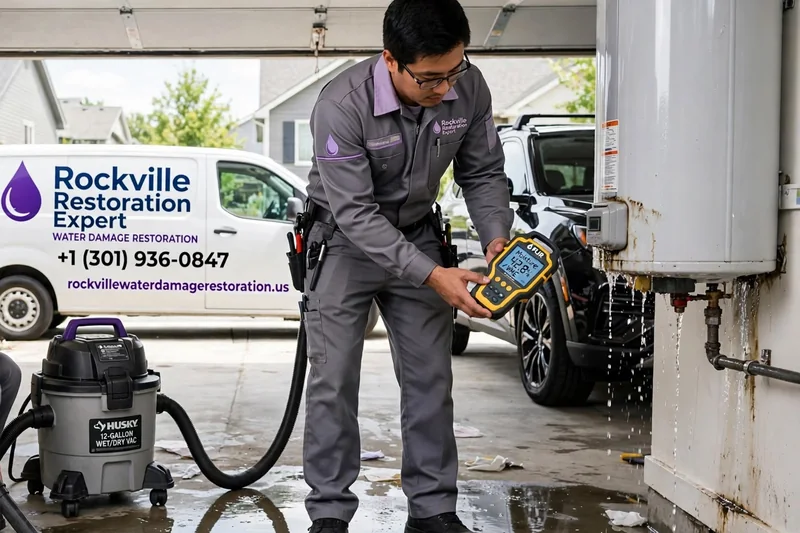
- Moisture meters read how wet framing, drywall, subfloors, and flooring are.
- Thermo-hygrometers track the temperature and humidity of the air in each room.
We place the equipment according to where the readings show water, so a job does not become a room full of fans.
Reading the Numbers: How We Know It Is Dry
We start by taking readings of the wet areas and of similar, unaffected materials in the same building. Those unaffected materials give us a dry reference, since a normal reading for drywall is different from a normal reading for framing lumber or a concrete slab.
During the job we return to the same spots and record the readings. Falling numbers mean the plan is working. If a reading stays high, we move the equipment, look for a hidden pocket of water, or reconsider the plan. The job ends when the wet materials reach their normal range, and we share the log with you. Our methods draw on ANSI/IICRC S500, the industry standard for professional water damage restoration.
Drying Different Parts of a Rockville Building
Basement Walls and Slabs
Below-grade walls and concrete floors can hold moisture longer than wood framing. After a flood, we check the slab, the bottom of the walls, and anything stored against them. Our basement water damage page covers the wider cleanup.
Hardwood Floors and Subfloors
Wood takes on water along its edges and underneath. We measure the boards and the subfloor, and we explain when a floor can be dried in place and when boards may have to come up.
Walls and Insulation in Older Homes
Older houses may have plaster, layered wall materials, or original framing that behaves differently from modern drywall. We inspect before opening anything and explain what has to be removed and why.
Shared Walls in Condos and Townhomes
Water that wets one unit often reaches the next. We check adjoining walls and floors and coordinate with building management so the drying reaches every wet space.
Living With Drying Equipment
- Expect noise. Air movers and dehumidifiers run steadily while they work.
- Expect warmth. Dehumidifiers add heat to the room, so it may feel warmer than usual.
- Do not unplug or move the equipment. Call us if you need a cord or a room freed up.
- Keep children and pets away from the machines and cords.
- Keep us posted. If you notice a new damp spot or smell, tell us right away.
Signs Moisture May Still Be Hiding
- A musty smell that returns after cleaning
- Paint that bubbles, peels, or stains again
- Baseboards that pull away or look darker than the wall
- Floors that cup, buckle, or feel soft
- Windows that stay foggy in a room that was wet
- A damp spot that grows after the visible water is gone
If one of these appears and you cannot find the source, water leak detection can help trace where the moisture is coming from.
Questions About Drying
Can I Just Open Windows and Use Fans?
That helps for a small spill on a hard surface, but fans alone cannot remove water from inside walls and subfloors, and open windows can bring in humid outdoor air. Measured drying works better when more than a surface is wet.
Can I Run My Own Dehumidifier?
A household unit can lower the humidity in a room, but it is not built for a wet building. If water got into walls or floors, ask for an inspection so the readings can show where it went.
How Long Will Drying Take?
It depends on how much water there was, what it soaked into, and how humid the building is. We do not guess a number before we have measured. We tell you what we see and update you as the readings change.
Will Drying Prevent Mold?
Fast, thorough drying lowers the chance of mold because mold needs moisture to grow. It cannot guarantee that mold will not appear, and it does not remove mold that has already started.
When Drying Is Not Enough
Some materials are better removed than dried. Soaked insulation, saturated padding, and drywall that has gone soft or crumbly may not be worth saving, especially if the water was dirty. If mold has begun to grow, drying alone will not remove it, and our mold remediation service handles affected materials.
Structural Drying Across Rockville
We dry buildings in Woodley Gardens, College Gardens, Hungerford, Lincoln Park, Rockshire, Fallsmead, North Farm, Montrose, Twinbrook, King Farm, Rockville Town Center, and the rest of the city, including ZIP codes 20850, 20851, 20852, 20853, 20854, and 20855. Give us your street address when you call, and we will tell you whether we can reach it.